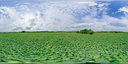
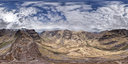
Ilot Mato is a wonderful anchorage with protection from all wind directions. Part of the UNESCO World Heritage Site, the island has a miniature lagoon within New Caledonia's Great Southern Lagoon. You can enjoy well developed coral reefs with ancient coral heads that are thousands of years old, a reef nursery area where baby tropical fish of every description begin their adventure, sea eagles, white sand beaches, and often nobody in the anchorage but your own yacht. Here is a virtual tour of Ilot Mato to tide you over until you can get here yourself. Be sure to click on the images to see the sphere image, read the caption and click on the full page view for a virtual reality expedition to Ilot Mato. All the details you need to get yourself here in person are on the Rocket Cruising Guide to New Caledonia. Order yours now at cruising-newcaledonia.com
Created 11/02/2019 by Richard Chesher
Armenia is a unitary, multi-party, democratic nation-state with an ancient cultural heritage. Urartu was established in 860 BC and by the 6th century BC it was replaced by the Satrapy of Armenia. The Kingdom of Armenia reached its height under Tigranes the Great in the 1st century BC and became the first state in the world to adopt Christianity as its official religion in the late 3rd or early 4th century AD. The official date of state adoption of Christianity is 301. The ancient Armenian kingdom was split between the Byzantine and Sasanian Empires around the early 5th century. Under the Bagratuni dynasty, the Bagratid Kingdom of Armenia was restored in the 9th century. Declining due to the wars against the Byzantines, the kingdom fell in 1045 and Armenia was soon after invaded by the Seljuk Turks. An Armenian principality and later a kingdom Cilician Armenia was located on the coast of the Mediterranean Sea between the 11th and 14th centuries.
Between the 16th and 19th centuries, the traditional Armenian homeland composed of Eastern Armenia and Western Armenia came under the rule of the Ottoman and Iranian empires, repeatedly ruled by either of the two over the centuries. By the 19th century, Eastern Armenia had been conquered by the Russian Empire, while most of the western parts of the traditional Armenian homeland remained under Ottoman rule. During World War I, Armenians living in their ancestral lands in the Ottoman Empire were systematically exterminated in the Armenian Genocide. In 1918, following the Russian Revolution, all non-Russian countries declared their independence after the Russian Empire ceased to exist, leading to the establishment of the First Republic of Armenia. By 1920, the state was incorporated into the Transcaucasian Socialist Federative Soviet Republic, and in 1922 became a founding member of the Soviet Union. In 1936, the Transcaucasian state was dissolved, transforming its constituent states, including the Armenian Soviet Socialist Republic, into full Union republics. The modern Republic of Armenia became independent in 1991 during the dissolution of the Soviet Union.
Armenia recognises the Armenian Apostolic Church, the world's oldest national church, as the country's primary religious establishment. The unique Armenian alphabet was invented by Mesrop Mashtots in 405 AD.
Armenia is a member of the Eurasian Economic Union, the Council of Europe and the Collective Security Treaty Organization. Armenia supports the de facto independent Republic of Artsakh, which was proclaimed in 1991.
Created 18/09/2018 by Flavio Di Mattia