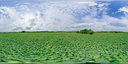
The story of Langkawi's rice fields is a testament to the island's identity as part of Kedah, known as the "Rice Bowl of Malaysia". For centuries, rice cultivation was the primary lifeblood of the island, governed by the cycles of the monsoon and deep-rooted community traditions. One of the most poignant chapters in this history is the legend of Beras Terbakar (The Field of Burnt Rice) in Padang Matsirat. In 1821, during a Siamese invasion, the island's chief ordered the entire rice harvest to be burned and buried to deny the enemy food. To this day, it is said that scorched grains still rise to the surface of the earth after heavy rains, serving as a somber reminder of the locals' resilience.
While tourism has since overtaken agriculture as the main economy, the preservation of these fields—enforced by local laws—ensures that the island's soul remains rooted in the land. Sites like Laman Padi were established in 1999 to bridge this heritage with the modern world, allowing visitors to step into the muddy waters and experience the labor-intensive "pearl-like grain" that has sustained generations of Malaysians.